

Pulling off an event at that scale meant carrying crushing operational and financial risk. Kurt saw it as a bet worth taking, because winning it would reset what the industry could be. “It changed CGA’s trajectory overnight,” he says. “It also proved to the world that Hong Kong can host the biggest esports events there are.”He also had to take on a much older assumption. Ask most people what an athlete is, and they will talk about the body. At the top of modern competition, though, matches turn on composure under pressure and calls made in milliseconds. “A pro makes hundreds of precise inputs a second, live on stage,” Kurt says. “The mental load is no different from a traditional sports star.” CGA’s high-calibre events are built to show that work — the concentration, the nerve — and to earn a new generation of athletes the respect they are due.
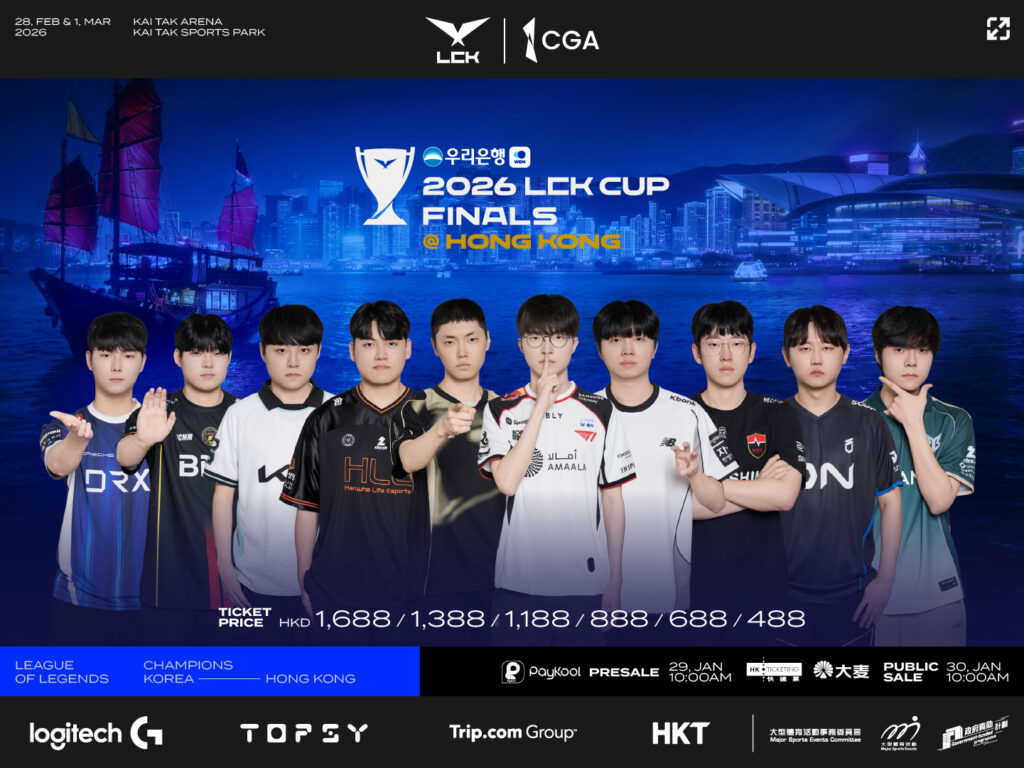
Esports lives online, where a platform can pull in tens of millions of viewers without breaking a sweat. Kurt still argues that nothing beats being in the room. “Picture tens of thousands of fans, all reacting to the same play at the same moment. That sound, that feeling of everyone’s heart beating together — a screen cannot give you that.” The point of a big live event is precisely to turn all that online reach into an actual crowd, with a bond you can feel.
Once you have a crowd like that, the industry’s survival comes down to one question: can you build a business around it? Classic sponsorship is a one-way sale of space. CGA went another way, acting as a cultural bridge between big brands and players. “We do not just sell inventory,” Kurt says. “We design experiences, online and off, that banks, developers and luxury brands can actually have fun with, and that speak to players in their own language.” Young audiences want to take part, not just be advertised at, and that depth is what turns a one-off sponsor into a long-term partner.

Hong Kong is a smaller market than Korea or the mainland, and nobody at CGA pretends otherwise. But 13 years in, Kurt knows exactly where the city’s edge lies. “It was never about size,” he says. “It is how agile and international we are, and where we sit — right on the doorstep of the Greater Bay Area.” CGA has leaned all the way into that, and turned a small market into the region’s leading stage for esports.
I hope the legacy CGA leaves is proof that Hong Kong can grow an esports scene with global influence — one where esports is not just a hobby, but part of pop culture and everyday life.
Ask him about the next decade and Kurt does not hedge. Esports, he says, will lose the “subculture” tag and sit alongside football and music festivals as mainstream entertainment. The events of the future will be where sport, pop, fashion and tech finally meet. “I hope the legacy CGA leaves is proof that Hong Kong can grow an esports scene with global influence — one where esports is not just a hobby, but part of pop culture and everyday life.” Call it the ambition of a man who has spent 13 years setting the board — and a challenge issued to the generation coming next.
Photographer: Ki Tang
Hair & Make Up Artist: Constance Chan


Recommended Articles
